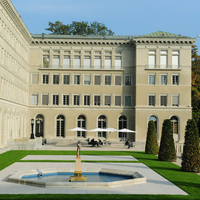


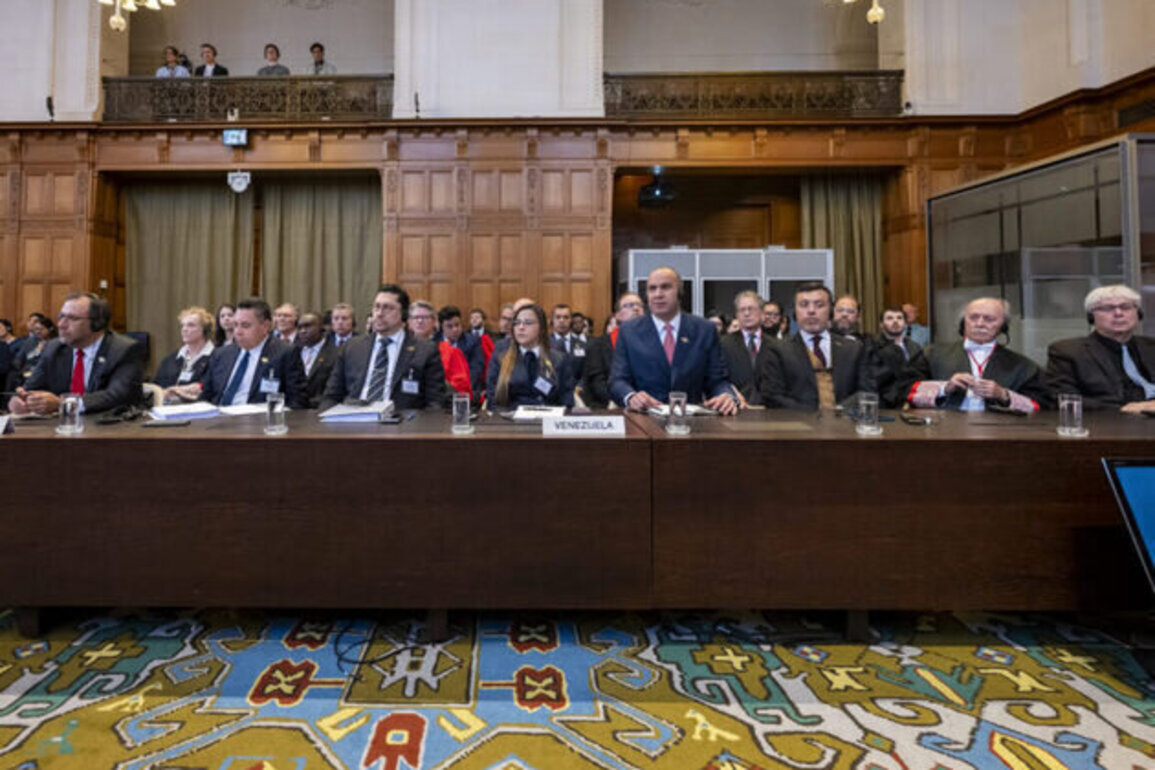
THE HAGUE, Netherlands (CN) - An oil-fueled border fight shaped by imperial mapmaking, Cold War diplomacy and competing claims to one of South America's richest regions reached its climax in The Hague on Monday, where Venezuela urged the world's highest court not to preserve what it sees as a colonial-era land grab more than a century in the making.
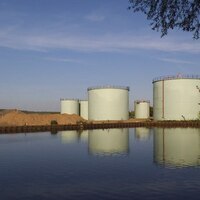
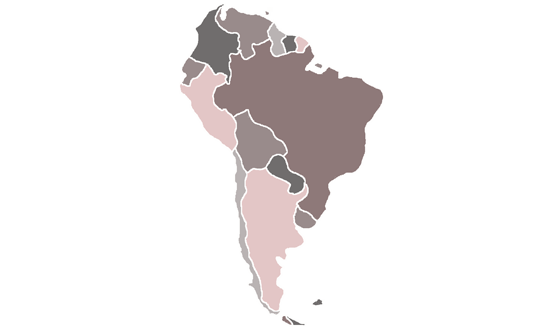
Guyana wants judges at the International Court of Justice to preserve a border drawn in 1899, a decision that left it with control over the sprawling Essequibo region, home to huge oil reserves and most of the country's landmass. Venezuela wants something very different. Its position is that the old arbitration can no longer be treated as the foundation of the dispute because a later agreement signed in 1966 shifted the process toward negotiations and a mutually acceptable political settlement.
Rather than letting the case sink into technical arguments over maps and arbitration procedure, Venezuela spent much of the final hearing trying to widen the frame.
Its lawyers argued the real question was not whether judges should simply bless a century-old arbitration award but whether borders hammered out during the age of empire should still dictate the future of a region now sitting atop enormous oil wealth.
"Not the validity or invalidity of the 1899 Arbitral Award, but the pursuit of a mutually satisfactory solution by Guyana and Venezuela," professor Paolo Palchetti told judges as Venezuela opened its final round of arguments Monday.
Again and again, Venezuela's team steered judges back to the 1966 Geneva Agreement signed shortly before Guyana gained independence from Britain, portraying it as an attempt to move both countries away from the rigid logic of the old arbitration and toward direct negotiations.
The hearings repeatedly drifted into the geopolitical horse-trading behind the original border deal.
Venezuela portrayed the arbitration less as a neutral legal exercise than as a geopolitical bargain shaped by Britain and the United States while Venezuelan officials watched from the sidelines and disputed territory rich in rivers, minerals and now massive oil reserves hung in the balance.
Danae Azaria, an international law professor appearing for Venezuela, walked judges through diplomatic correspondence from the 1890s in which Venezuelan officials warned of British aggression and feared that without American backing, "dangerous consequences would inevitably follow."
Venezuela used those records to argue the arbitration unfolded under intense political pressure rather than through the kind of balanced process Guyana says finally settled the border.
Britain and Venezuela spent decades fighting over the jungle territory bordering what was then British Guiana before an arbitration tribunal in Paris largely sided with Britain in 1899, drawing the border Guyana still defends today. Venezuela accepted the outcome for years before later claiming the deal had been stitched together through imperial pressure and closed-door bargaining.
The fight exploded again in the 1960s as Guyana prepared for independence from Britain.
In 1966, Britain, Venezuela and the soon-to-be independent Guyana signed the Geneva Agreement, promising to keep searching for a negotiated solution without actually settling the border itself. The agreement froze the controversy in place for decades as diplomats, mediators and United Nations officials cycled through failed attempts to break the deadlock.
By 2018, the standoff had landed before judges in The Hague after the U.N. secretary-general referred the dispute to the International Court of Justice.
What followed was years of jurisdiction battles, written pleadings and emergency requests tied to Venezuela's increasingly assertive moves around Essequibo, including referendums, new maps and state-backed measures reinforcing its claim over the territory. In both 2023 and 2025, judges ordered Caracas not to alter the status quo while the case remains pending.
The hearings unfolded against a geopolitical backdrop far bigger than a normal border case.
Huge offshore oil discoveries transformed Guyana into one of the world's fastest-growing economies, while Essequibo became increasingly woven into Venezuelan domestic politics through nationalist campaigns, official maps and public votes reaffirming the country's historical claim.
Washington has been watching closely, too. Last year, U.S. Secretary of State Marco Rubio warned that any Venezuelan move against Guyana or ExxonMobil's oil operations would be "a very bad day" for Caracas, as Washington increasingly viewed the Essequibo dispute as more than just a regional territorial fight.

Guyana warned judges that Venezuela's actions threatened its territorial integrity and regional stability. Venezuela answered by insisting it still supports a peaceful settlement process and accusing Guyana of trying to reduce the proceedings to little more than judicial approval of a colonial-era award.
Moises Augusto Montiel Mogollon, a Venezuelan international law scholar and professor at Mexico's Center for Research and Teaching in Economics, explained Venezuela spent the hearings trying to pull the case away from the narrow legality of the 1899 award and toward the much larger territorial and political controversy recognized under the Geneva Agreement.
According to Montiel, Venezuela portrayed the agreement "as more than a procedural mechanism for dispute resolution, but as a transformative and peace-seeking framework," built around decolonization and negotiated coexistence instead of "winner-takes-all approaches."
Politics burst directly into the courtroom near the end of Monday's hearing when Venezuelan acting President Delcy Rodriguez rose to address the judges herself.
"I come before this court to bring you the voice of a people who deeply cherish justice, peace and international law," Rodriguez told the panel while again insisting Venezuela had never accepted the court's authority to settle the territorial dispute.
She tied Caracas' position directly to a 2023 referendum in which Venezuelan voters backed maintaining the country's historical claim over Essequibo and rejected compulsory judicial settlement.
Guyana's lawyers answered with warnings that Venezuela's arguments could unsettle post-colonial borders far beyond South America. They insisted the Geneva Agreement never erased the 1899 award and accused Caracas of trying to reopen territory long treated as settled through a new legal theory developed decades later.
At one point, Guyana counsel Paul Reichler brushed aside Venezuela's colonial-era narrative altogether, telling judges: "In Texas, they would simply say: 'That dog don't hunt.'"
Montiel, however, said Venezuela was trying to do far more than wave around "mere rhetoric or political posturing," casting the hearings instead as a challenge to whether borders hammered out through 19th-century imperial dealmaking should still be treated as untouchable today.
With oral proceedings now over, the case moves into private deliberations. Judges are expected to spend months working through thousands of pages of historical records, diplomatic correspondence and legal arguments before issuing a final ruling in one of the most politically explosive territorial disputes currently before the world court.
Courthouse News reporter Eunseo Hong is based in the Netherlands.
Source: Courthouse News Service