

HOUSTON, Texas: The global natural gas market has split sharply in recent weeks, with Europe and Asia scrambling for supply while the United States remains flooded with cheap fuel it cannot export fast enough.
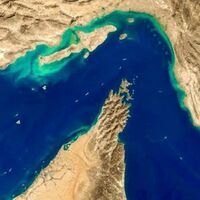
The disruption stems from the war with Iran, which has halted about 20 percent of global liquefied natural gas (LNG) supply. Damage to Qatari facilities and threats to shipping through the Strait of Hormuz have pushed international gas prices sharply higher.
In contrast, U.S. gas prices have dropped. Since the conflict began on February 28, benchmark Henry Hub futures have fallen as much as 12 percent to a 17-month low of US$2.52 per million British thermal units (mmBtu). Prices in Europe and Asia, meanwhile, have surged by up to 84 percent and 108 percent, reaching around $21 to $22 per mmBtu.
The divergence reflects infrastructure limits. The United States, the world's largest gas producer, has enough supply to meet domestic demand and feed its LNG export plants. But those plants are already operating near capacity, preventing additional exports despite strong global demand.
Pipeline bottlenecks are compounding the issue. In the Permian Basin, a major shale region, gas is so abundant that prices at the Waha Hub in West Texas have dropped below zero on many days this year. With pipelines full, some producers must pay others to take the gas.
U.S. production, which reached a record 107.7 billion cubic feet per day in 2025, is expected to continue rising. Growth is being driven by demand from data centers and by oil producers generating more associated gas as their wells mature.
However, new pipeline capacity is still months away. Analysts at Bank of America said "meaningful transport relief" is unlikely until late this year or early 2027.
Some regions within the United States face the opposite problem. New England, for example, relies on imported LNG during winter due to limited pipeline connections, exposing it to higher global prices.
The supply crunch has created winners and losers. Companies with available LNG cargoes have benefited from soaring global demand. Firms such as Venture Global and Cheniere Energy have sold shipments to buyers seeking alternatives to disrupted Gulf supplies.
"Venture Global is (relatively) new to the LNG game and had spot cargoes available to put out to the highest bidder," said Bob Yawger, director of energy futures at Mizuho. "Suddenly, everybody needs LNG now that QatarEnergy is out of the picture."
U.S. LNG capacity is expected to nearly double from about 18 bcfd in 2025 to 35 bcfd by 2030, based on projects under construction.
But domestic producers have struggled with low prices. Some, including EQT, have begun cutting output to wait for stronger demand.
"Our strategic curtailments act as a form of storage, keeping gas in the ground (during) seasonally low periods of demand," EQT CFO Jeremy Knop said.