

BUENOS AIRES (CN) - Fifty years ago, a military junta staged a coup in Argentina, casting a shadow that reverberates today, with thousands of descendants and survivors still demanding justice.
In mid-March, a forensic group of local experts announced the identification of a dozen bodies buried in mass graves in a military compound in central Argentina. For families who had searched for nearly half a century, it marked the first certainty about the fate of their loved ones.
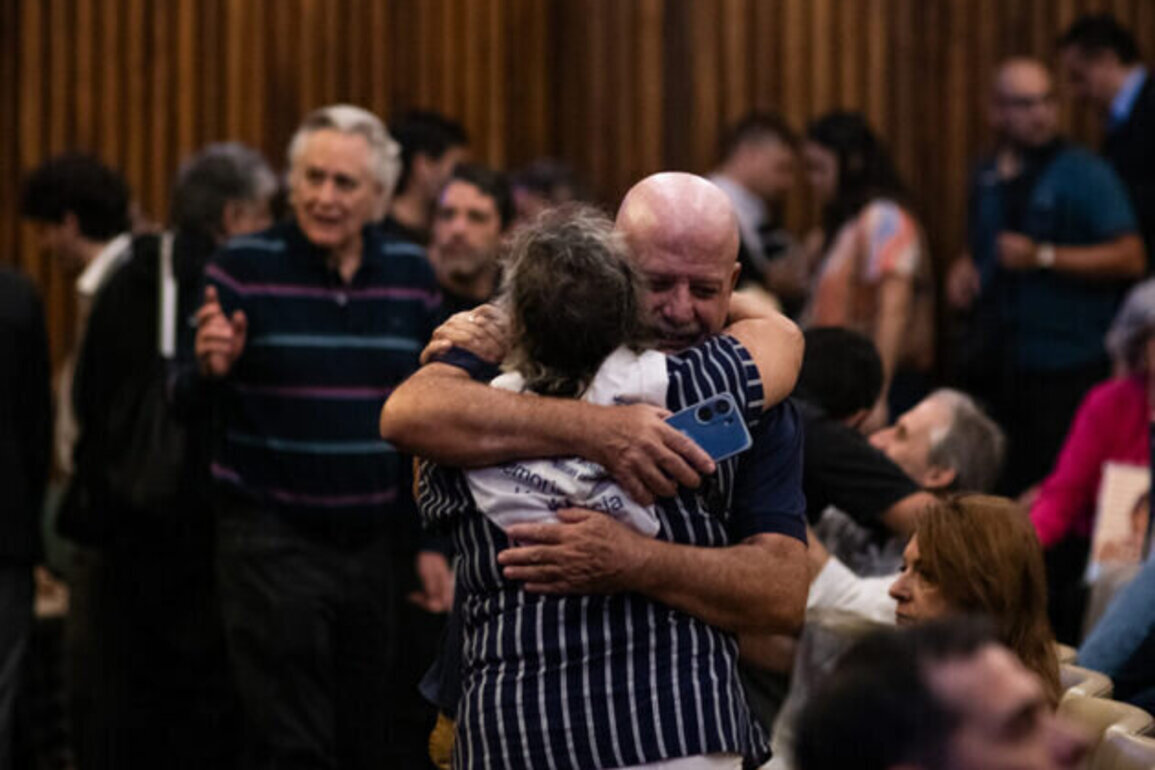
"Dad is here now," said Rodolfo Reyes, 57, son of one of the men whose remains were identified. "No longer a desaparecido." The term means "disappeared."
Standing in a large courtroom, after a judge read the names of the 12 recently identified bodies, Reyes oscillated between grief and relief. For his family, a cycle of 50 years of searching had concluded.
For thousands of others, it remains open.
In its first public broadcast on March 24, 1976, the junta warned: "We recommend to strictly stick by the orders from the military authority, and to avoid individual or collective actions and attitudes that would demand the drastic intervention of its personnel."
For nearly eight years, the military carried out a system of state terror that permeated all aspects of social life, seeking to halt political dissent after years of violence between government-adjacent armed groups and local guerrillas.
Behind the promise of restoring order, a surgical, nationwide system of terror was unleashed upon Argentine students, workers, activists, unionists and anyone tied to them, with a dire method: disappearance.
According to human rights organizations, more than 30,000 people were forcibly disappeared between the early '70s and 1983, when the dictatorship ended. More than 500 babies born in captivity were stolen by the military, raised as their own.
Even during the junta years, mothers of the kidnapped and grandmothers who searched for their grandchildren born in captivity dared to claim the truth. But the reckoning process took a long time, with trials started and halted shortly after the return of democracy, and investigations frozen until the early 2000s, when a progressive government ordered the end of impunity for the military.
However, grassroots efforts never ceased. A group of anthropology students in 1984, mentored by the world-renowned American forensic anthropologist Clyde Snow, took the search for the missing into their own hands.

More than 40 years later, the Argentine Forensic Anthropology Team, EAAF, has found over 1,000 bodies - following tips, using tech, locating potential burial sites, putting pieces together, but mostly by digging patiently.
And while some of its members joke about being inspired by Indiana Jones movies, the truth is their work often feels like an epic, too, filled with obstacles, mysteries and epiphanies.
With time, their pioneering method became a beacon for similar groups across the world, as the team researched and trained others in the aftermath of tragedies and violence, from genocides and organized crime to missing migrants en route to the United States.
Reconstruction of the years of systematized violence showed the disappeared were mostly abducted, taken to specific places called clandestine detention centers and submitted to torture, rape, slave labor, forced births and the theft of their babies by military families - and then killed. Their bodies, disposed of in different ways to make sure they were untraceable, were thrown off flights into the river, burnt to ashes, or buried in public cemeteries or mass graves without identification.
Twelve of those bodies were restored to their families this week, after a decadeslong search in a military field in Cordoba, one of the country's biggest provinces. La Perla, the secret military detention center where they were found, was one of more than 800 military concentration camps strewn across the nation.
The forensic team has worked in the 37,000-acre military compound for decades, but their search field narrowed with tips, court information and satellite imagery from the late '70s. They defined a 25-acre area where they worked for months last year - and their precision paid off.
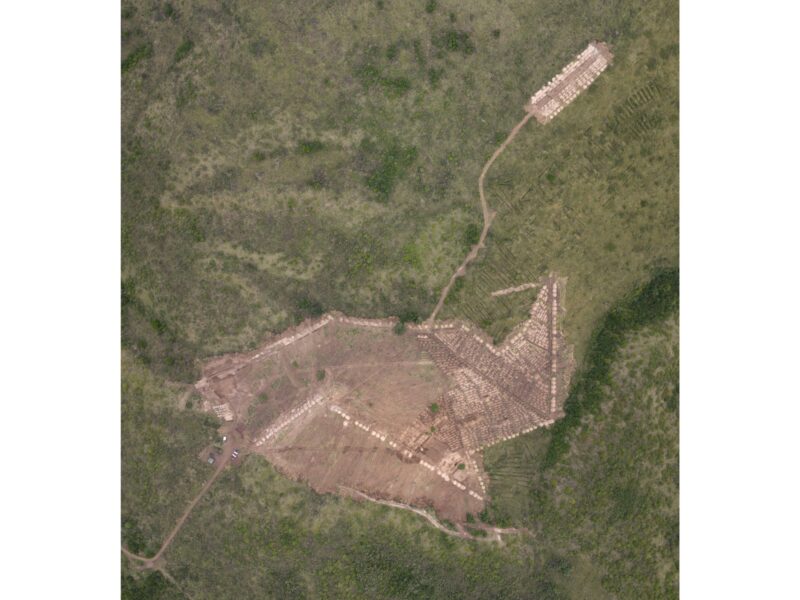
Silvana Turner, an EAAF member who led the search in La Perla, said it was the first time they found human remains in the area. Once the rainy season ends, they'll carry on with their search. Human rights groups estimate 2,500 kidnapped people went through La Perla over the course of the dictatorship.
"Forty years ago, there was a bigger hope of finding the missing alive," Turner said. "But, although it's hard, our aim is that knowing what happened serves as a form of reparation."
One of the relatives at the news conference in court, visibly moved, said: "I want to thank the mothers and grandmothers who never stopped fighting. They kept searching, and now we've been able to find our father: That, to us, is a relief."
Another said, "I'm really happy my father can return to the arms of his family and be greeted with love. We know his comrades are somewhere, and we won't stop until they all return, too."
Oscar Omar Reyes, Rodolfo Reyes' father, was a mechanic and a communist. Rodolfo was just 7 when his father was abducted on his way to a political gathering. Last week, as he learnt that he had been kept in La Perla, he recalled his father's social commitment.
"My dad believed in justice: that we all had to access the same chances, that we're all equal, that we all deserve the same," he said, shortly after the court conference. "They took him away from me."
He worries the dismantling of memory and truth policies in the Javier Milei era could damage the agreement around what happened half a century ago - and potentially create a climate where political dissent could once again serve as an excuse for violence.
Milei has been the most controversial president of the democratic era, questioning the consensus about the number of the junta's victims, dismantling public policies around memory, and insulting leaders of human rights organizations, calling them scammers. He has also pushed for a revisionist rhetoric of the junta years, demanding a "complete memory" that equates the armed forces' crimes against humanity with the crimes committed by guerrillas.
On the day of the anniversary, thousands will turn to the streets to keep demanding truth about what happened to the thousands still missing. And the next day, the search will continue.
The forensic team has endured changing, often nerve-wracking epochs - but curiosity never ceased to drive their quests.
However, they know that what's yet to be found depends on collective work. "If you don't know what you're looking for," said Turner, "you'll never find it - not when it's right before your eyes."
Lucia Cholakian Herrera is a Courthouse News correspondent based in Buenos Aires, Argentina.
Source: Courthouse News Service