

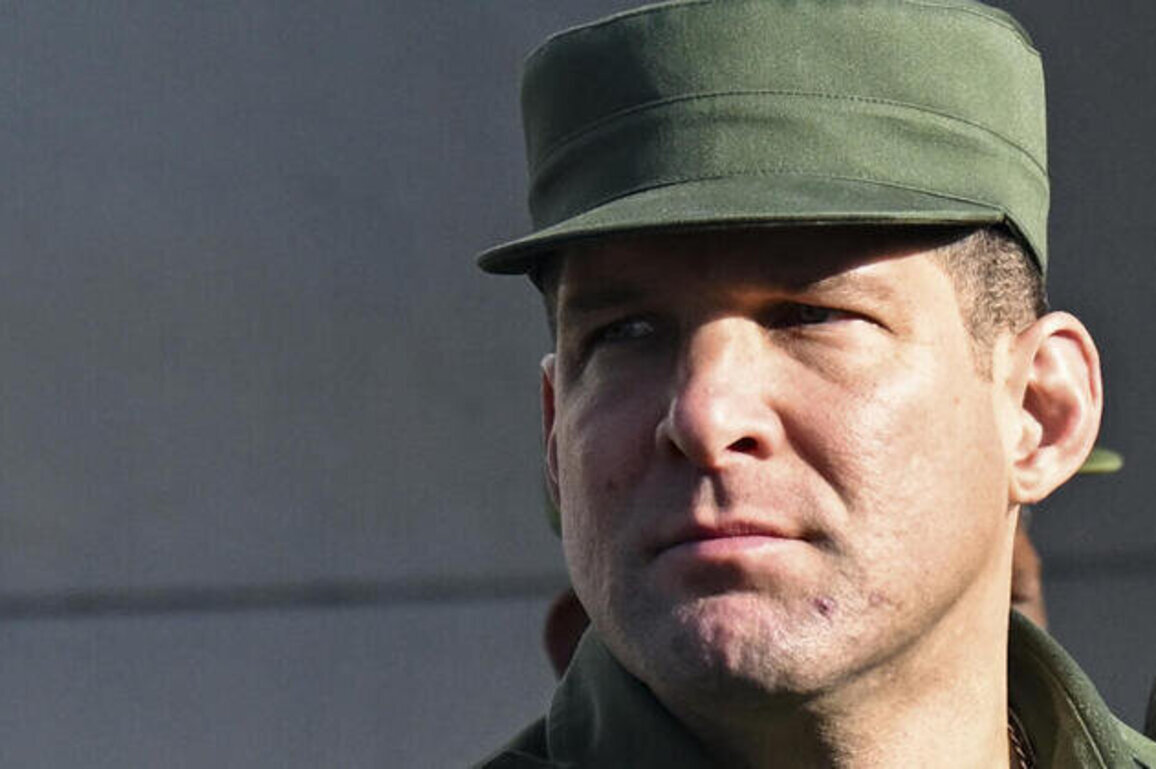
As the US increases pressure onCubaand the economic andhumanitarian situationon the Islanddeteriorates rapidly,a new figure has emerged in the delicate relationship between the two countries: Raul Rodriguez Castro.
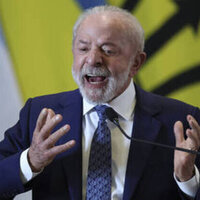
The grandson ofRaul Castroa former president and the brother ofFidel Castroappeared sitting next to Cuban PresidentMiguel Diaz-Canelwhen he confirmed that negotiations were taking place between the US and Cuba.
Rodriguez Castro later attended a press conference where Diaz-Canel addressed the islands economic crisis, which had intensified in recent months after the Trump administration imposed anoil blockadethat has repeatedlyplunged the island into darkness.
He has also been appearing more often in public in Cuba, while rumours have emerged about secret negotiations between him andMarco Rubio, the Cuban-American secretary of state.
His emergence marks a break with past practice. There used to be an effort to protect Raul Rodriguez Castro and let him evolve backstage, said Thomas Long, a Latin America specialist at the University of Warwick.
Rodriguez Castro, 41, is the son of Dborah Castro Espn, the eldest daughter of Raul Castro, and Rodrguez Lpez-Calleja, who led the state-owned holding company that manages most of the Cuban economy.
But ever since Trump began speaking of regime change on the island,speculation has emergedthatRodriguez Castro could take on a leadership role.
The Trump administration seems to be seeking Diaz-Canels ouster from power but is not pushing for action against the Castro family, according to aNew York Times report, which cited official sources who preferred to remain anonymous.
The shadow of Raul Castro
Raulito was raised in the inner sanctum of the Castro clan and in strict respect of a regime doctrine that has long benefited his family. He came under the wing of his grandfather, who made him his favourite and came to trust him the most over time, said Pablo Uchoa, an expert on security issues inLatin Americaat the University College of London.
Rodriguez Castro received both a military education, within an institution that prepares future army officers, and a civilian education, obtaining a double degree in finance and accounting at the University ofHavana.
He began to climb the ranks,attaining the rank of colonel and becoming his grandfather's personal bodyguard during his presidency.
Raul Castroevennominated himto be chief of the General Directorate of Personal Security (DGSP). Its a crucial organisation in Cuba because its responsible for protecting all the regimes important people we know how this is a sensitive issue in Cuba, said Long.
It is difficult to estimate the real extent of Rodriguez Castro's political influence beyond his role in the security apparatus. But Long said his position at the head of the DGSP and being a colonel gives him a certain authority in the army, which remains an essential element of the regime.
And yet the grandson of Raul Castro does not hold a senior position within the government or the Communist Party.He does not seem to be a charismatic leader following in the footsteps of some of his family members.
He is clearly not a political star, said Uchoa.
Read moreTrumps risky gamble: Can the US 'run' Venezuela after Maduro's capture?
Rodriguez Castro remainslargely unknown, even in his own country. He is said to have been married more than once and has two children. Another personal detail about him comes from his other nickname "El Cangrejo" (The Crab), stemming from the fact that he was born with a malformation of one of his fingers.
There have beenreportsthat he enjoys a luxurious lifestyle reserved for the inner circle of Cuban power.
Cuba is not Venezuela
But now he seems to be getting pushed to the forefront of Cuban politics. Faced with the profound crisis in Cuba, the president needed a dose of revolutionary legitimacy incarnated by Castro.President Diaz-Caneldoes not have the most solid political base, noted Long.
For Diaz-Canel, it is likely that the unparalleled weight of the Castro name" is playing a role in his decision to elevate him, said Rubrick Biegon, a US foreign policy expert at the University of Kent and the author of US Power in Latin America:Renewing Hegemony".
For Washington, the fact that Rodriguez Castroisnt a major actor in Cuba makes it easier to hold secret negotiations, said Uchoa.
He could also be useful for Washington in any transition after Diaz-Canel is removed from power.
For one, he carries a name that incarnates a certain continuity. Yet as the grandson of Raul Castro, he is somewhat "distanced from the revolutionary generation" which means he could also represent change, said Biegon.
Read moreWho is Delcy Rodriguez, Maduro's VP and now the acting president of Venezuela?
It would be difficult to imagine that a Castro family member would be Trumps choice for a new leader in Cuba. The community of Cuban exiles in Florida probably wouldnt accept it, said Biegon. This influential diaspora is represented at the highest echelons of the US government by Rubio.
Cuba is notVenezuela, either, said Uchoa. Trump may view Rodriguez Castro as the potential Cuban counterpart toVenezuelan vice presidentDelcy Rodriguez, who has been cooperating with the US sinceNicolas Maduros capturein the beginning of this year while remaining loyal to the regime in place. Yet the power in Cuba depends much less on a single man than in Venezuela,said Uchoa. It also doesnt seem likely that Washington will impose someone during ongoing negotiations if the rest of the regime doesnt agree.
Another possibility is the collapse of the entire regime caused by the current economic crisis, which some say is unlikely despite repeated internet cuts, blackouts and protests. There is still no clear sign that the control in the hands of Miguel Diaz-Caneland the party is diminishing, said Biegon. As for protests, they appear more like an expression of anger against the lack of water andelectricitythan calls for regime change, Uchoa said.
This article was translated from theoriginal in French.
Originally published on France24