

21st Human Rights Conference: Is it possible to restore democracy?
IDEHPUCP Editorial*
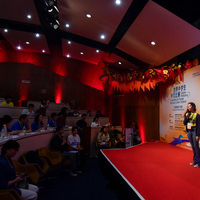
Idehpucp, May 5, 2026.This week marks the Human Rights Conference, which has been organized for twenty-one years by the Institute for Democracy and Human Rights at the PUCP. This year, the conference is focusedas could not be otherwiseon the prospects emerging from the general election process. These prospects naturally give rise to extreme concern regarding the future of democracy in Peru.
The past five years, during which we have witnessed a systematic destruction of democratic institutions by the groups occupying Congress, paint that future in very dark hues. This has reached the point where various observersindividuals or institutions, domestic or foreignhave questioned whether the current regime can still be called a democracy in the strict sense.
The holding of the first round of elections underscores this critical situation quite clearly. Due to the refusal of one of the losing candidatesLpez Aliagato accept the results, an attempt at institutional destabilization has been triggered, in which the rule of law has been violated or called into question in various ways by all those aligned with the fraud narrative.
As noted earlier, beyond the intemperance and the authoritarian and violent reactions of the losing candidate and his entourage, this destabilizationnow centered on interference with the electoral systemhas been aided by the National Board of Justice, the Public Prosecutors Office, and the Ombudsmans Office.
Added to this in recent days is the acting mayor of Lima (following Lpez Aliagas resignation), who, using municipal resources, has begun to operate as another cog in the mechanism by filing baseless legal actionseven though this is not the responsibility of the municipal authority.
This situation, which is a recent example of the aforementioned political breakdown, underscores the importance of the reflection proposed by the Idehpucp for its 21st Human Rights Conference. This has been conceived as a call to recognize that the survival of democracy is at stake and to ask ourselves how we might prevent a deeper descent into authoritarianismand its links to corruption and organized crimewhich has been the norm over the past five years.
Under the title Recovering Democracy. The Urgency of the Rule of Law, the Conference explores these issues through three themes. The firstWhat Kind of Democracy Are We Living In?proposes taking a realistic, even stark, assessment of the current situation. It aims to analyze the various forms of dismantling the rule of law and democratic institutions carried out by Congress with the consent or complicity of the Executive Branch.
In addition, this strand will analyze what the results of the first round tell us in terms of a democratic reactionor lack thereofto this landscape.
The second strandThe Public Sphere in Crisisconstitutes an examination of the social transformations that coincide with this breakdown or that, eventually, could serve to reverse it. It is essential, at this point, to observe the changes in public discourse marked by the proliferation of disinformation and hate speech, all of which is amplifiedor, in fact, made possibleby the unstoppable technological revolution in communication channels. Digital platforms are the channels through which official or mass lies and polarization circulate: is it possible to find in them, as well, an antidote to these trends?
Questions like this are the focus of the third section titled Citizenships in Motion and Democratic Prospects. If it is essential to recognize the magnitude of the crisis, it is equally essential to identify the means society has to confront it. Therefore, this section will reflect on the meanings of social mobilization and on how the defense of human rights is both an ideal and a resource for the countrys political recovery.
As noted in his opening lecture by jurist Antonio Maus, a professor at the Institute of Legal Sciences at the Federal University of Par (Brazil), democracy is best understood as a regime in constant construction, subject to setbacks and advances, and one that requires a vigilant and active citizenry for its realization. By emphasizing the process of deterioration and the various factors that today conspire against democracy in Peru and in many other nations and regions, this meeting is intended not as a call for resignation, but as a warning signal that, precisely, will reactivate or reinforce the defense of the rule of law and human rights in our community.
Source: Editorial from the weekly newsletter of the Institute for Democracy and Human Rights at the Pontifical Catholic University of Peru (IDEHPUCP):https://idehpucp.pucp.edu.pe/boletin-eventos/editorial-xxi-encuentro-de-derechos-humanos-es-posible-recuperar-la-democracia/SERVINDI