

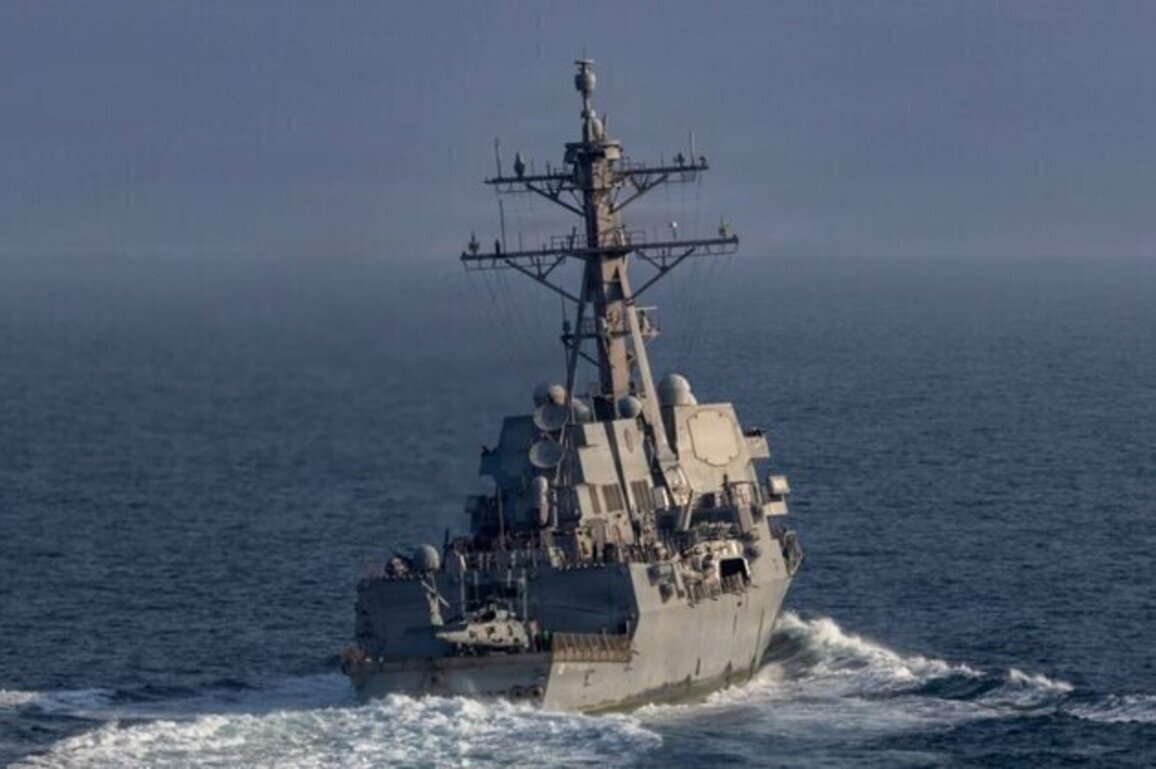
A US naval blockade on ships entering Iranian ports and coastal areas has come into effect, followingfailed peace talksbetween US and Iranian negotiators over the weekend. And it already poses a dilemma: risk attack from Iranian assets near the Strait of Hormuz or hold back and hope to catch vessels breaking out into the open seas.
The move is the latest attempt by US President Donald Trump to force Iran into making concessions, including a commitment not to seek a nuclear weapon or the means to build one.
It follows more than a month of air strikes and long-standing economic sanctions.
Military Aspect
Washington has substantial naval and air forces in the region which could be expected to enforce the blockade. For some, it would mean a switch from carrying out air strikes to interdicting civilian vessels.
Attempting to do this from in or near theStrait of Hormuz, the narrow waterway through which Iranian seaborne exports pass, could put US naval assets at risk from attack by Iranian drones, missiles, or small fast attack ships.
Several weeks of US and Israeli air strikes have severely degraded Iranian capacity, but the powerful Islamic Revolutionary Guards Corps (IRGC) has its own naval units composed of these small craft, which have continued to attack shipping in the Persian Gulf.
If any of these ships come anywhere close to our BLOCKADE, they will be immediately ELIMINATED, wrote Trump on social media shortly after it came into force.
The risks could be minimized.
Given that, for example, some 90 percent of Iranian oil shipments go to China, US forces could conceivably sit back and police the blockade from a distance where they would be less vulnerable.
They could choose to position themselves outside the Persian Gulfwithout physically controlling the Strait [of Hormuz] itself, Mohammad Farsi, a former Iranian naval officer, told RFE/RL's Radio Farda after Trump announced the blockade. They dont need to sit inside the strait.
But Farsi said he doubted such an approach would be effective. It would mean patrolling a wider stretch of sea than the 30-kilometer-wide waterway.
SEE ALSO:
Dark Crossings And Danger Money: Sailors Relive 1980s 'Tanker War' Amid Hormuz Crisis
Jeremy Stoehs, a naval expert at the Austrian Center for Intelligence, Propaganda and Security Studies (ACIPSS), agreed it would be difficult.
"A blockade at distance would pose quite a significant challenge for US forces in the theater, especially as civilian vessels go dark to evade being stopped," he told RFE/RL.
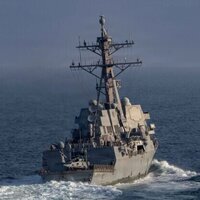
"The US Navy notoriously lacks smaller surface combatants, such as frigates, and would have to release its Arleigh Burke-class destroyers and other higher-end assets into such taskings," he added.
Economic Impact
The decision to target Iranian-linked shipping has a clear economic logic, laid out in a recent US policy note.
Oil revenue from China accounts for about 45 percent of Irans government budget, said afactsheetpublished by the US Congress on March 16.
In recent weeks, Irans near-total closure of the Strait of Hormuz to shipping other than its own has been described as achokeholdon the world economy, shutting it off from oil, gas, and other crucial commodities.
The US blockade aims to strangle the Iranian economy, which has continued benefiting from oil exports despite the war that began with US and Israeli air strikes on February 28.
Iran actually was able to export quite high quantities of its oil, basically the same as last year in the same month, Isaac Levy, an analyst at the Center for Research on Energy and Clean Air (CREA), told RFE/RL on April 13.
If the US do block that, it would prohibit the Iranian regime from adding a lot of money from this, but it would have upward pressure on global oil prices taking off54 million barrels [per month] when there's currently a huge supply constraint, he added.
SEE ALSO:
The Air Strikes Have Paused But Iranians Worry About What Comes Next
This danger was already evident in the hours after the blockade was announced, as physical crude oil prices in Europe surged to record levels around $150 per barrel. Benchmark Brent crude rose above $100 a barrel, adding to price pressures that extend across the globe.
The decision Mr. Trump has taken could have serious effects both on the US economy and on overall social cohesion -- particularly in terms of the burden on American consumers at the gas pump, Mohammad Ghaedi, a lecturer at George Washington University, told RFE/RL's Radio Farda on April 13.
Iranian countermeasures might add to the economic damage, he said, adding that attacks by the Tehran-backed Houthis in Yemen to close theBab al-Mandab Strait-- another crucial Middle East shipping route -- could remove about 12 percent of global energy supply from the market.
China
There are also potentially major diplomatic repercussions to the blockade.
Its not clear if Chinese-flagged ships are visiting Iranian ports. Historically,shadow fleetsof rusting oil tankers used by Iran, Russia, and Venezuela have mostly flown flags of convenience from countries such as Sierra Leone, Gabon, or the Marshall Islands. These would be likely targets of US enforcement action.
However, earlier Trump comments suggested the blockade would also extend to vessels paying a toll to Iran to pass through the Strait of Hormuz.
"I have also instructed our Navy to seek and interdict every vessel in International Waters that has paid a toll to Iran. No one who pays an illegal toll will have safe passage on the high seas," he said.
According to marine intelligence company Windward, two Chinese vessels, the He Rong Hai, a tanker, and the Jin Hai Hua, a bulk carrier, exited the strait on April 10. They both began their voyages in the United Arab Emirates, not Iran.