

From wildfires in South America and Australia to flooding southern Africa, climate change is delivering deadly impacts that largely come down to too much or not enough water.
A disrupted global water cycle has long been at the centre of the climate crisis, with scientists and policy-makers sometimes remarking that climate change is often about water in all the wrong places. In recent days, those extreme impacts have broken out in different parts of the world, multiple time zones apart.
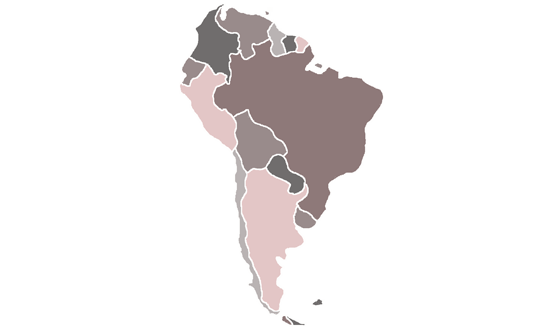
In Chile, wildfire raging across the central and southern parts of the country left at least 18 people dead Sunday, scorched thousands of acres of forest, and destroyed hundreds of homes, as the South American country swelters under a heat wave, The Associated Press reports.
Chilean President Gabriel Boric declared a state of catastrophe in the country's central Biobio region and the neighbouring nuble region, around 500 kilometres south of Santiago, the capital.
The emergency designation allows greater coordination with the military to rein in over two dozen active wildfires that have so far blazed through 8,500 hectares, according to the national forestry agency.
In a news conference from the hard-hit city of Concepcion in the Biobio region, Boric expressed his support and condolences to the victims and warned that the government's initial reports of 18 people killed and 300 houses destroyed were expected to rise as the extent of the losses came into focus.
He estimated the total number of affected homes in the Biobio region alone to be "certainly more than a thousand, just so far." Already the fires ravaging the hillsides forced 50,000 people to evacuate.
"The first priority, as you know, in these emergencies is always to fight and extinguish the fire. But we cannot forget, at any time, that there are human tragedies here, families who are suffering," he said. "These are difficult times."
His address followed complaints from local authorities that for hours, destruction was everywhere and help was nowhere.
"Dear President Boric, from the bottom of my heart, I have been here for four hours, a community is burning, and there is no (government) presence," Rodrigo Vera, the mayor of the small coastal town of Penco in the Biobio region, said on a local radio station earlier Sunday. "How can a minister do nothing but call me to tell me that the military is going to arrive at some point?"
Firefighters struggled to extinguish the flames, with the heat and strong winds hampering their efforts. Temperatures topped 38C/100F on Sunday, and the scorching weather was expected to persist through Monday.
"Weather conditions for coming hours are not good and indicate extreme temperatures," said Interior Minister Alvaro Elizalde.
Residents said the fires took them by surprise after midnight, trapping them in their homes.
"Many people didn't evacuate. They stayed in their houses because they thought the fire would stop at the edge of the forest," said John Guzman, 55, surveying the scene in Penco, where smoke blanketed the sky in an orange haze. "It was completely out of control. No one expected it."
The fire engulfed most of Penco, burning cars, a school, and a church. Thousands of people scrambled to take refuge in makeshift emergency shelters.
"We fled running, with the kids, in the dark," said Juan Lagos, 52.
The government imposed a nighttime curfew in the area. Charred bodies were found across fields, homes, along roads, and in cars.
"From what we can see, there are people who died... and we knew them well," said Victor Burboa, 54. "Everyone here knew them."
Wildfires afflict central and southern Chile every summer, typically reaching a peak in February as temperatures surge and the country continues to reel from a yearslong drought. In 2024, massive fires ripping across Chile's central coastline killed at least 130 people, becoming the nation's deadliest natural disaster since a devastating 2010 earthquake.
Neighbouring Argentina has also struggled to contain wildfires consuming thousands of acres of forest in recent weeks as the country's southern Patagonia area experiences hot, dry weather.
Weeks of heavy rains have left more than 100 people dead in Mozambique, South Africa, and Zimbabwe, with major rescue efforts still under way in Mozambique and South Africa, AP writes. The rains prompted South Africa to declare a national emergency last weekend.
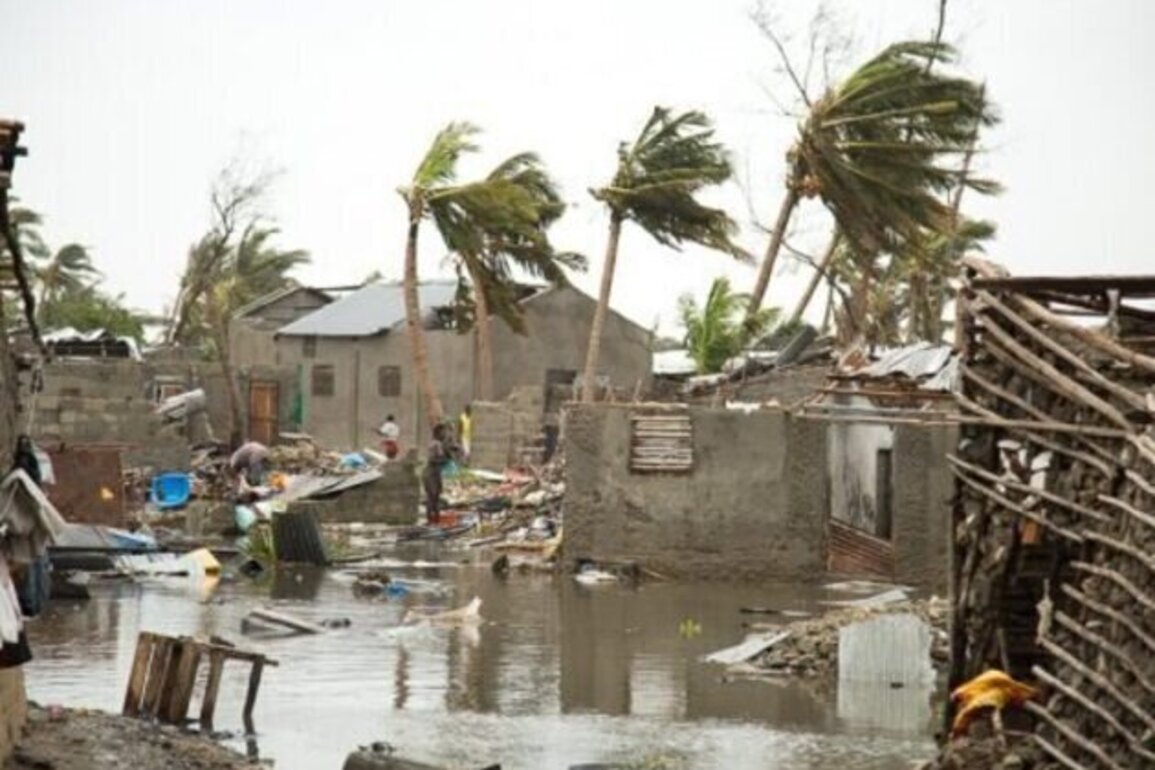
In Mozambique, more than 300,000 people were displaced after weeks of torrential rains hit the central and southern parts of the country and submerged about 40% of Gaza province. The state-run daily newspaper Noticias said the severe flooding prompted President Daniel Chapo cancelled his trip to the World Economic Forum in Davos, Switzerland.
Gaza governor Margarida Mapandzene Chongo said around 327,000 people were being housed in dozens of temporary shelters like schools and churches. They had fled or been evacuated from flooded or flood-threatened areas of the southern province, which has a population of about 1.4 million.
Humanitarian organizations said earlier this month they feared around 200,000 people would be affected by the extreme weather in Mozambique, but it appears that number has been exceeded. Cabinet minister and government spokesperson Inocencio Impissa said nearly 600,000 people had been affected in Gaza province and neighbouring Maputo.
Chongo said authorities were now calling for the evacuation of everyone from the lower parts of Gaza's provincial capital of Xai-Xai as more flooding threatens that city of around 115,000 people, which lies next to the Limpopo River. Streets in Xai-Xai resembled rivers as floodwater surged through parts of the city, according to videos on the city's official Facebook page.
Images from the nearby town of Chokwe that was the site of earlier evacuations show floodwater almost entirely covering houses and other buildings, with only the tips of some of their roofs visible.
Mozambican authorities said the severe flooding in northern South Africa was now impacting Gaza-which borders South Africa-as rivers flowing into Mozambique had burst their banks.
Chongo said "the situation is likely to worsen" in Gaza because of heavy rains in southern Zimbabwe that would also ultimately flow toward her province.
Mozambique, a nation of 34 million people on the southeastern coast of Africa, has borne the brunt of devastating cyclones and a crippling drought in recent years. Several provinces have been hit by these floods, with conditions in three of them described by authorities as "critical."
A countrywide red alert warning, the highest level, has been issued over the disaster conditions.
The National Institute for Disaster Risk Reduction, which is coordinating rescue operations, said around 110 people were rescued by helicopter on Sunday while trapped in trees or other high points. They included children, elderly people, and one pregnant woman about to go into labour.
Transport and Logistics Minister Joao Matlombe said around 40% of Gaza was submerged by water, 152 kilometres of roads across the country had been completely destroyed, and more than 3,000 kilometres of roads were damaged.
The recovery cost for Mozambique could run to hundreds of millions of dollars. The premier of one of the provinces in South Africa impacted by weeks of heavy rains said the damage there could total around $250 million.
In Australia, summer bushfires "raged in dozens of locations across the country for several days," the British Broadcasting Corporation reports, with the states of Victoria and New South Wales hardest hit. One person died and 300 properties were destroyed.
"A state of emergency has been declared in Victoria as thousands of firefighters and more than 70 aircraft battle the blaze. Residents in more than a dozen communities have been advised to leave their homes," BBC writes.
"Authorities fear the fires, which are being fuelled by very hot, dry, and windy conditions, could burn for several weeks."
The fires in southeastern Australia were the worst since the summer of 2019-2020, when fires burned an area the side of Trkiye, 33 people were killed, and "hundreds more are believed to have died due to the effects of the smoke which choked towns and cities," BBC says.
Victoria Premier Jacinta Allan said 30 active fires had burned 350,000 hectares across the state. "We will see fires continue for some time across the state and that is why we are not through the worst of this by a long way," she told media. "There are fires that are continuing right now that are threatening homes and property."
In the small town of Harcourt in Victoria's central highlands of Victoria, firefighter Tyrone Rice lost his own home in the fires. He said that news was "like a kick in the guts, but I'm not the first person to go through it, and I won't be the last."
The Associated Press stories in this post were republished by The Canadian Press.
Source: The Energy Mix