

Jack Dulgarian
Download PDF
Jan 21 2026
micheleursi.hotmail.com/DepositphotosWhile the operation to capture Venezuelan President Nicolas Maduro was asuccess, Washingtons strategic objective with Venezuela has not been achieved. TheVenezuela mission accomplishedmisconception by some is largely due to lack of general understanding on the concept of thethree levels of war: strategic, operational and tactical. In short, the strategic level is the U.S. overall intent for Venezuela over a multi-year period, the operational are the total of many sets of military actions which occur in different increments, and tactical are the various ground and air procedures and minute-by-minute decisions to accomplish said operational goals. Therefore, the operational objective to capture President Maduro has been conflated with Washingtons strategic priorities writ large. So, why does the removal of Maduro not fully result in Washingtons ability to project strategic power over Venezuela?
In statecraft and military affairs, there is an underlying concept of the center of gravity which is the core of every governments ability to provide its moral and/or physical strength to project power domestically and internationally. It is assessed that the center of gravity of Venezuela is: (1) The holistic apparatus of Maduros oligarchic family and allies who (2) control the means of energy production, sales, and revenue that are (3) backed by the National Bolivarian Armed Forces of Venezuela (FANB). President Maduro himself was a focal piece, but not the focal piece within the Venezuelan center of gravity. It follows that the Washington should understand the consequences of Operation Absolute Resolve would open pandoras box for escalatory future pathways. Was the elimination of the Venezuelan center of gravity necessary for the implementation of Washingtons highest strategic priority? And before that can be answered, what was Washingtons highest strategic priority with Venezuela?
This analysis will forecast four future pathways for U.S. intent to Venezuela depending on Washingtons highest strategic priority. Each priority will assess an action that Washington may take based on its primary objective and judge consequences following such. Each are ranked from in descending order of probability according to the authors judgements from English and Spanish (translated) language media.
In the first scenario, a resource model where Washington prioritizes Venezuela for energy is the most likely pathway in light ofrecent newson Venezuela-U.S. oil payments to and senior White Housemeetingswith Western oil companies. Washington plausibly would use the least amount of force in this scenario as it currently holds strategic advantages with Maduro in captivity, a blockade in the maritime domain and air dominance. This model would not require the U.S. to eliminate the Venezuelan center of gravity.
There are two plausible consequences from this intent: a de jure diplomatic agreement achieved between Washington and Caracas and a de facto cold peace where the U.S. Military guarantees U.S. and/or Western energy companies to garner Venezuelan energy without Caracas military retaliation. In the de jure diplomatic agreement pathway: The U.S. officially agrees to recognize the Delcy Rodriguez interim presidency and pledges non-aggression, while President Maduro is convicted and imprisoned in jail (or he is placed under house arrest in U.S. or a partner nation). In exchange, energy companies become the chief facilitator of resource extraction and distribution of revenue to the Caracas government.
In the de facto cold peace: The U.S. may adopt a similar playbook toTurkeys illegal drillingof resources on the occupied side of Cyprus on behalf of theunrecognizedTurkish Republic of Northern Cyprus. This pathway would essentially be a de facto agreement between Caracas and Washington wherein energy companies would drill with U.S. Military backing. The Venezuelan Government would protest in diplomatic and informational campaigns, yet withhold military retaliation. Venezuela would be in a similar situation to the United Nations recognized Republic of Cyprus as nation-state with widely recognized claims to its exclusive economic zones (EEZ) but no capability to prevent adversarial resource extraction.
A second scenario, the Prestige Model, is an alternative where Washington pockets the Venezuela crisis for elevated negotiating prowess. Realist international relations scholar John Mearshimer opined after the Russia-Ukraine War that the world has entered a newCold War. Over the last year, Washington has engaged in a proxy war withRussia, a shadow war withIranand the Axis of Resistance, maintained a cold peace with China over theSouth China Seaand economicrivalry, plus experienceddeathsin unsafe middle east combat zones, includingSyria, where the U.S. is currently supporting aformer Al Qaeda operativeto rebuild the still divided country.
Under this model, one would assume that third party actors and adversaries such as Russia, China, Iran, etc. are aware of the U.S. ability to escalate the pace of conflict with a nation and carry out high-level operations at a moments notice. The U.S. strategic goal towards Venezuela would remain the status quo for an indefinite period of time as Washington seeks to increase its militaristic prestige over Beijing, Moscow, and Tehran. This model is plausible because U.S. President Donald Trump has made public statements to reinitiate negotiations on ending theRussia-Ukraine War,Chinatrade, andIrans protest debacle.Under this model, President Trump probably calculated that Venezuela was an advantageous geopolitical sideshow which provoked fear of military force over his adversaries and creates a new starting position in diplomatic negotiations. Perhaps the most classic example of a great power attacking another state to gain an advantage over a rival great power occurred during the Peloponnesian War (431-404 BC). Sparta attacked and incited revolts among Athens weaker allied states. Although this example took place during a protracted overt war, not amongst negotiations between Sparta and Athens.
This pathway does not exclude U.S. partners and allies, as Trump hasdiscussedthe possibility of acquiring Greenland. The U.S. Militarys lighting speed operation on Maduro combined with Presidential rhetoric on military force as an option may have made the Danish owners of Greenland and European Union writ largeapprehensiveto seriously consider some sort of agreement with American interests on the island.
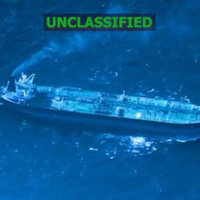
A third scenario, the Neoconservative Model, is a conventional Venezuelan regime change where Washington likely would install the Nobel Peace Prize Winner Corina Machado and/or other opposition as a new Caracas government. The new government would exercise favorable energy deals for the U.S. and cooperate to eliminate U.S. recognized terror groups including, cartels (Recently, the Secretary of Statenotedhe is not in favor of working with Machado, which decreases this assessments likelihood to third of four, assuming his words are taken in good faith). This pathway sees a continuation of kinetic military strikes, similar to Operational Absolute Resolve, wherein Venezuelan critical defense assets and energy infrastructure are destroyed, rendering the FANB crippled and the Rodriguez Government dry from revenue. The U.S. Navy could increase thecaptureof tankers as well. This would lead to the FANB surrendering and the collapse of the government, allowing for Machado and/or other opposition to take power.
However, even if the U.S. overthrows the Venezuelan regime in favor of an opposition candidate, it may not likely have the popular mandate to rule. Some regions, powerful families, cartels, militias, etc. may feel inclined to take up arms not to dissimilar to insurgent movements of the Global War on Terrorism. The Venezuelan streets have also seen demonstrationsin favorof Maduro, which indicates a conventional overthrow of the Venezuelan center of gravity to install an opposition government would be difficult and face protracted resistance.
A fourth, and final, scenario is the Cuban Domino Model where Caracas is a stepping stone for the primary goal of overthrowing the Communist regime in Cuba. In U.S. corporate media, elected officials and cabinet members have linked Venezuelan to Cuban freedom asone in the same. Moreover, Cuba has generally relied on Venezuela for its energy needs and struggled with basic living standards for many of its citizens. If this was Washingtons highest strategic priority, the pace of escalation would increase simply through passing time. The U.S. naval blockade could exacerbate worsening conditions of the dire energy situation in Cuba. Furthermore, another blockade of Cuba could be implemented preventing goods from leaving or entering the country. This pathway may also see gunfire exchanged on the island between the U.S. Military stationed atGuantanamo Bayand the Cuban Revolutionary Armed Forces. However, the Havana Government would not likely fall given the ongoing drivers geopolitical conditions for the next 30 days.
All things considered, the different pathways on Venezuelas future, as outlined in this article, depend on the overall strategic goal for Washington towards Caracas which remains unclear and enshrouded in the general chaos of the second Trump term.
Further Reading on E-International Relations
- Opinion A Niebuhrian Analysis of the US Operation in Venezuela
- Opinion What Has Trump Got Planned for Venezuela?
- Opinion Trumps Spectacle of Domination in Venezuela
- Opinion Venezuela and the Cost of Abandoning South American Collective Defense
- The Diffuse Unilateralism of Trumps Venezuela Intervention
- Repeating Iraq in Venezuela: Different Presidents, Same Mistake
About The Author(s)
Jack Dulgarianis a Washington, D.C.-based analyst and consultant specializing in national security and defense with a focus on the Near East, Eastern Europe, and great power competition. He has been referenced by National Defense Universitys Joint Quarterly Magazine and given lectures to the State Departments Foreign Service Institute. You can follow him onSubstack.
TagsDonald TrumpVenezuela