

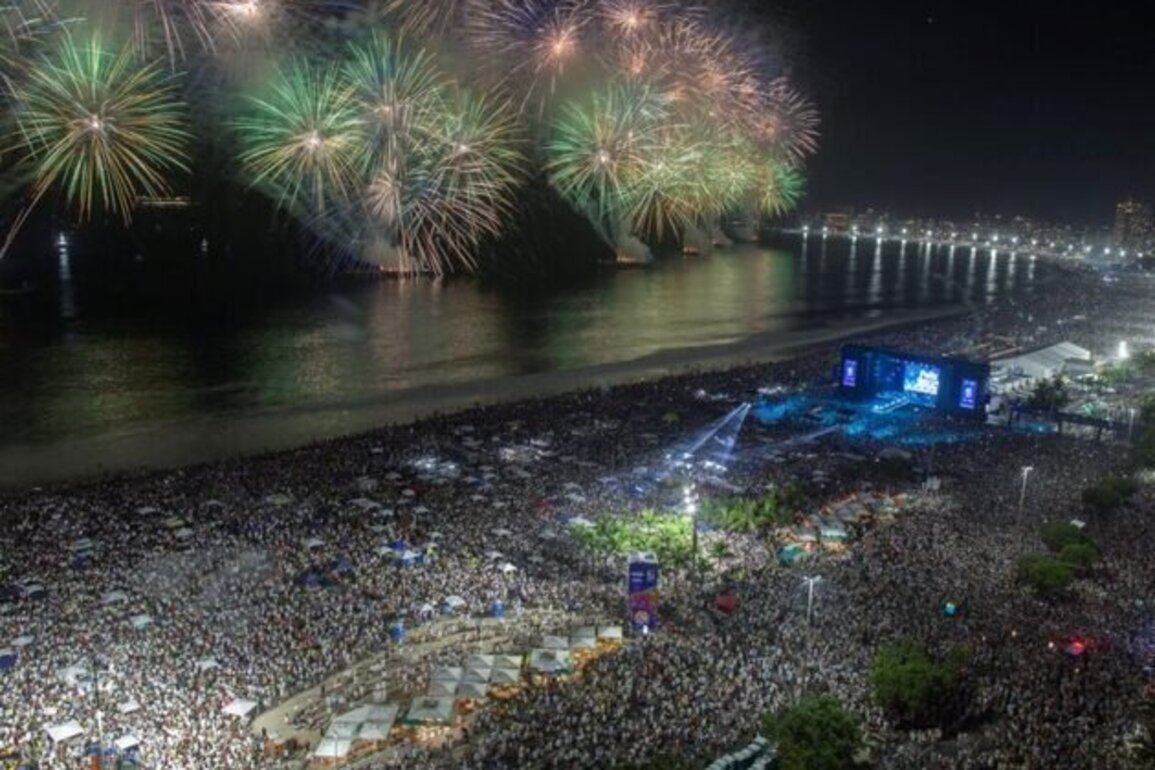
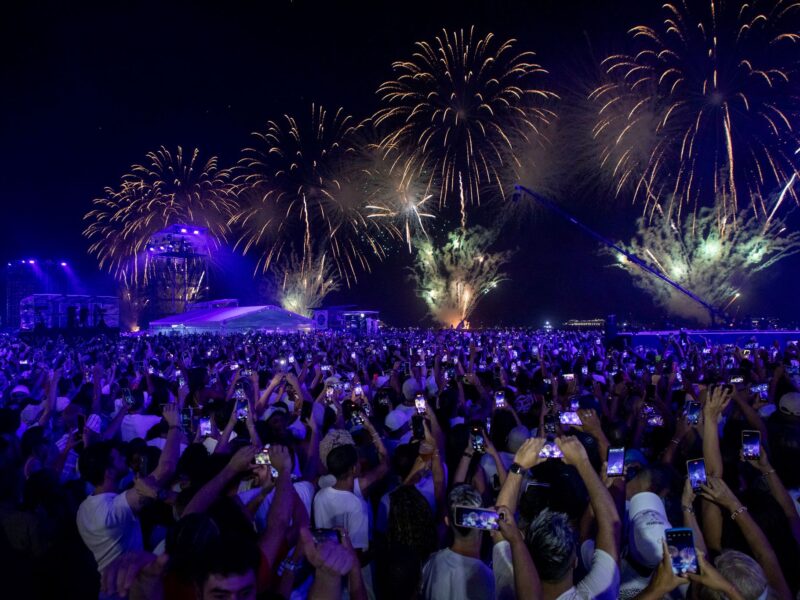
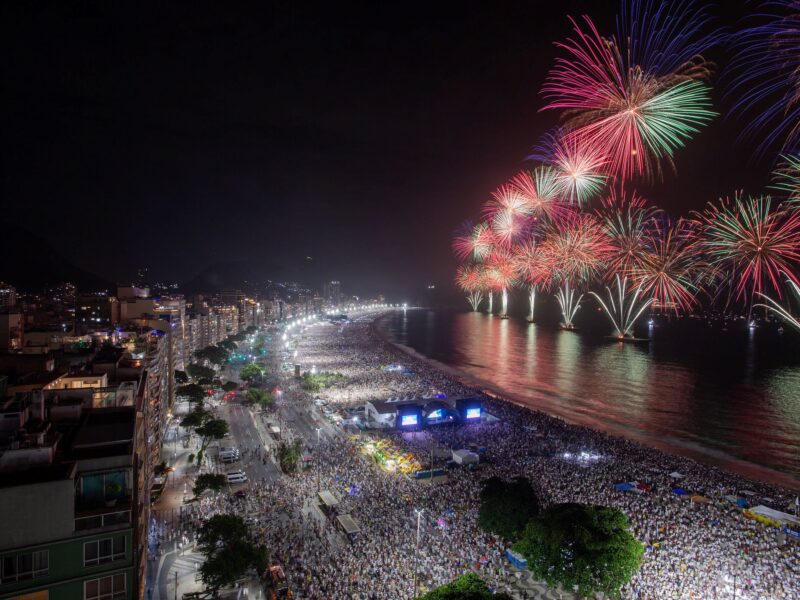
RIO DE JANEIRO (CN) - Regardless of the year or the setting, white clothing is a constant presence in Brazil's New Year's Eve celebrations. The tradition is rooted in Afro-Brazilian religious rituals held in Copacabana, Rio de Janeiro, beginning in the 1950s.
Although white clothing became widely accepted as a cultural practice, its religious origins remained for decades associated with stigmatization, police persecution and legal restrictions - a contrast that helps explain why Afro-Brazilian religions continue to face widespread prejudice even as their symbols remain highly visible in celebrations.
In the colonial period, Catholicism was the official religion of the Brazilian state, then part of the Portuguese empire. Laws imposed punishments on religious practices outside that framework, and an 1832 decree required the conversion of enslaved Africans to Catholicism.
Even after the Republic abolished the official religion and formally criminalized religious intolerance, criminal law continued to target practices of African origin. The 1890 Penal Code classified activities such as spiritism and folk healing practices as crimes against public health, provisions used to justify police surveillance and raids on Afro-Brazilian religious spaces.
In 1940, the replacement of the Republican-era Penal Code with the current one did not end this pattern. The new code retained crimes such as folk healing practices and charlatanism, which continued to be applied to Afro-Brazilian religions, particularly through police and administrative actions in urban centers.
Until 1976, for example, a law in the state of Bahia required temples of African-origin religions to register with the nearest police station. In Paraiba, a 1966 law required religious leaders of those religions to undergo psychiatric evaluations.
Against this backdrop, Tata Tancredo da Silva Pinto, an Umbanda religious leader, began bringing religious images and rituals to Copacabana beach, according to Ivanir dos Santos, a professor in the graduate program in Comparative History at the Federal University of Rio de Janeiro and a Candomble religious leader.
"As a way to confront intolerance and reaffirm African cultural and spiritual identity, he came up with the idea of taking the saints - known at the time as 'macumba saints' - to the beach to perform religious ceremonies there," Santos said.
To take part in the ceremonies, practitioners wore white clothing, a color associated with purity, truth and spiritual protection.
"Then something interesting happens," said Hedio Silva Jr., a lawyer and founder of the Institute for the Defense of Afro-Brazilian Religious Rights. "Brazilians looked down on it, but foreign tourists staying at Copacabana's luxury hotels began to enjoy seeing something different."
Once hotel operators recognized the interest of foreign visitors, Silva said, the hospitality industry "in some way, if not actively encouraging it, at least helped prevent police repression."
At the time, Rio de Janeiro was still Brazil's capital, Santos said, and many visitors traveled to the city during the holiday period, eventually taking the tradition to other parts of the country.
For Santos, the contradiction lies in the fact that while Brazil's tourism culture developed in dialogue with Afro-Brazilian traditions and religions, those manifestations were gradually absorbed by the market.
Even as symbols and rituals became part of major events and the tourism calendar, Afro-Brazilian religions continued to face episodes of intolerance and attacks.
According to Brazil's Ministry of Human Rights and Citizenship, 2,472 complaints of religious intolerance were registered in 2024, a 66.8% increase from the previous year. The individuals most frequently targeted belonged to Umbanda and Candomble.
In November, a nationwide survey highlighted the persistence of religious violence against Afro-Brazilian communities.
The study Respeite Meu Terreiro, based on responses from leaders of 511 Afro-Brazilian religious communities, found 77% reported experiencing religious racism and 74% reported threats or destruction of sacred spaces.
Respondents identified evangelicals as the main aggressors (59%), followed by public officials (10%), neighbors (8%) and social media users (6%).
Brazil's 1988 Constitution establishes the country as a secular state with no official religion and guarantees freedom of conscience and belief, as well as the free exercise of religious worship.
It also imposes a duty on the state to protect religious manifestations and places of worship and prohibits discrimination based on religion.
According to Wallace Corbo, an associate professor of constitutional law at the State University of Rio de Janeiro, although religion and culture are deeply intertwined, the Constitution provides stronger protection for religion.
"It guarantees freedom of conscience and belief," he said. "That means the values held by an individual or group, related to their worldview, receive heightened protection from the state."
Corbo said the legal classification of an offense depends on the nature of the practice targeted.
Brazil has a set of laws that criminalize religious discrimination and seek to protect the free exercise of worship.
Legislation equates religious intolerance with the crime of racism, establishes prison sentences for discriminatory acts and criminalizes public mockery, disruption of religious ceremonies and vilification of objects or places of worship.
Other laws recognize Afro-Brazilian religions as part of the country's cultural heritage and establish policies to combat religious intolerance.
For Ingo Wolfgang Sarlet, a professor of constitutional law at the Pontifical Catholic University of Rio Grande do Sul, Brazilian courts have been consistent in curbing discrimination and religious intolerance while recognizing proselytism as a legitimate religious activity.
Brazil's Supreme Court, he said, distinguishes between preaching - the attempt to persuade others of one's faith - and conduct that constitutes discrimination, harassment or violence, which violates pluralism and the rule of law.
"There is a very thin line between militancy, often aggressive, and proselytism, which is preaching," Sarlet said.
Sarlet said Brazil has sufficient legal tools to address religious intolerance but added that "even the best laws are rarely sufficient if they are not also supported by society itself."
Silva said that despite the constitutional and legal framework, and guarantees set out in international treaties to which Brazil is a signatory, there remains a persistent gap between the law and everyday religious relations in the country.
He said the state has an obligation to ensure different expressions of faith can be exercised in both private and public spaces under conditions of respect and coexistence, but that commitment has been strained by recurring rights violations.
According to Silva, the situation has worsened with the growth of neo-Pentecostal churches and their increasing presence in institutional politics, including the occupation of public administration spaces and the influence of religious caucuses in Congress.
A recent example is a bill proposing changes to Brazil's anti-racism law that would limit the liability of religious leaders for discriminatory speech.
Approved by the lower house's Constitution and Justice Committee on Dec. 17, the proposal exempts statements made during religious activities - such as sermons, preaching and worship services - from criminal liability, even when publicly disseminated.
The bill now awaits consideration by the full lower house and, if approved, will still need Senate approval before reaching the president for signing or veto.
For Silva, initiatives like this reinforce an environment of institutional vulnerability for Afro-Brazilian religions, which continue to be targets of disparaging rhetoric and attacks, even as symbols of those traditions are increasingly reframed as culture and consumption.
"It's the paradox of people who spend the year demeaning Afro-Brazilian religions but still wear white on New Year's Eve," Silva said.
Courthouse News reporter Marilia Marasciulo is based in Brazil.
Source: Courthouse News Service