

BELEM, Brazil (CN) - When Belem became the center of global climate negotiations last week, schools closed, taxis carried COP30 decals and Brazil temporarily moved its political capital to the Amazon: A sense of urgency has surrounded the proceedings from its opening days.
Since the U.N. Climate Summit's opening ceremony in the northern Brazilian state of Para, officials have referred to COP30 as the "COP of implementation" and "COP of truth." President Luiz Inacio Lula da Silva said that although the world is "moving in the right direction," it is doing so "at the wrong speed."
The urgency was reflected immediately including the swift adoption of the agenda - a signal of consensus and trust in multilateralism.
Andre Corra do Lago, Brazil's diplomat and president of COP30, said negotiators "will have to work in the spirit of mutirao" this week. The Portuguese word, of Tupi origin, refers to collective work and has become a recurring expression at this year's conference.
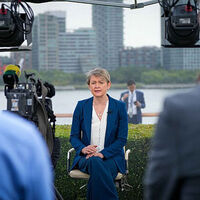
"We passed the second test today," Ambassador Liliam Chagas, Brazil's chief climate negotiator, said Saturday during a news briefing. "The second test was shifting from the first week to the second week with critical material needed to continue work."
Chagas said the technical phase ended with "not-so-obvious" advances.
She said officials made decisions on capacity-building, climate empowerment, developing countries and Article 6.8 of the Paris Agreement - which deals with non-market approaches for cooperation on mitigation, adaptation and sustainable development.
She also pointed to progress on the first draft on synergies among climate, biodiversity and desertification, a new item on the climate agenda.
Chagas added that 15 other substantive issues advanced to the ministerial phase with text stable enough for political negotiations in the second week, though differences remain on adaptation, finance and just transition.
Outside the formal track, the Brazilian presidency and COP29 released the Baku-Belem Roadmap, a political guide meant to organize discussions on implementation and climate finance. The document ties the debate to the new collective climate finance goal, anchored in developing countries' proposal to mobilize $1.3 trillion a year starting in 2025.
The initial week of the conference, which opened Nov. 10 and runs through Nov. 21, also brought several firsts, including an unprecedented full day dedicated to the justice system.
Ministers and judges noted that climate litigation is reshaping the relationship between governments and citizens, with authorities arguing that courts must ensure environmental commitments no longer remain "empty promises" and instead produce concrete effects.
Leonardo Brant, a judge at the International Court of Justice, highlighted the court's advisory opinion, calling states' failure to address the climate crisis a breach of international law.
Released in July, the opinion requested by the U.N. General Assembly (Resolution 77/276) was a rare instance of unanimous agreement among judges.
"It is the first time the court has recognized that climate harm has an erga omnes character - that is, it affects all of humanity," Brant said Thursday during an official session. "Climate failure is no longer only a political irresponsibility; it has become a legal wrong."
The conference also placed information integrity at the center of discussions and presented sectoral plans involving health, industry, finance and adaptation.
Announcements throughout the first days provided early signals of what countries may be willing to deliver as they negotiate the final text.
While negotiators worked on formal outcomes inside plenaries, the atmosphere outside them was shaped by something that had not happened in three years: The conference returned to a democratic country.
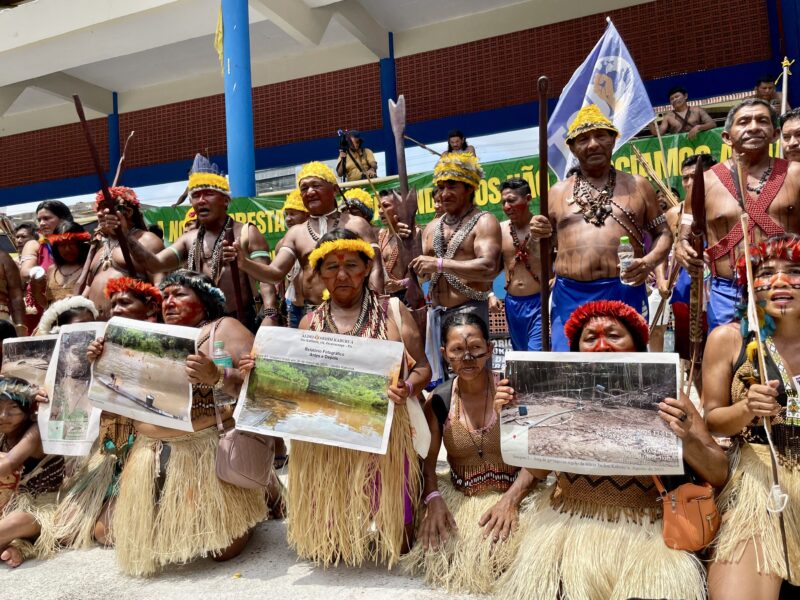
The setting drew a larger presence of social movements, researchers, Indigenous peoples and environmental organizations, which filled pavilions with debates on governance, climate risks and private-sector responsibility.
"COP30 is a COP that speaks out," said Marcele Oliveira, a climate activist and the conference's Youth Champion, a role created to strengthen youth participation in official discussions.
She said the dynamic was visible in the Green Zone, which remained crowded throughout the week - something unusual in previous editions.
"Democratizing the climate agenda is a legacy for the world and especially for Brazil," she said.
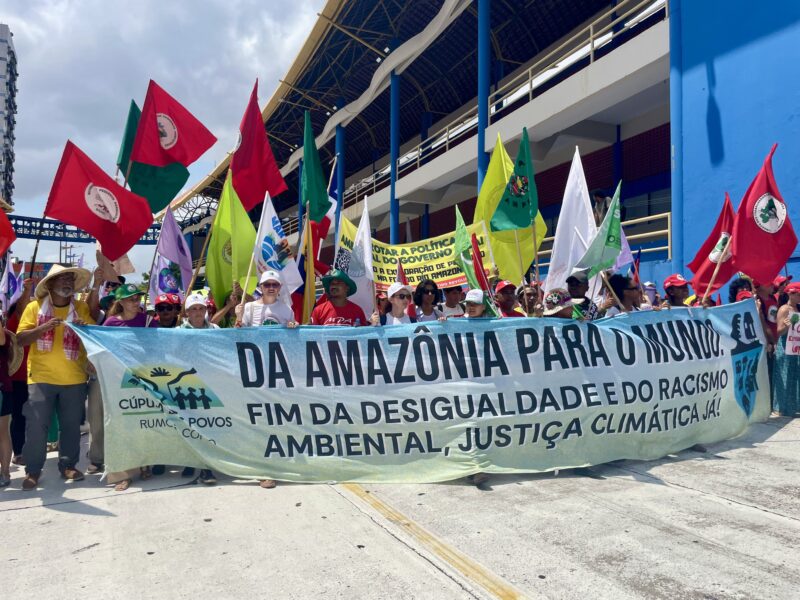
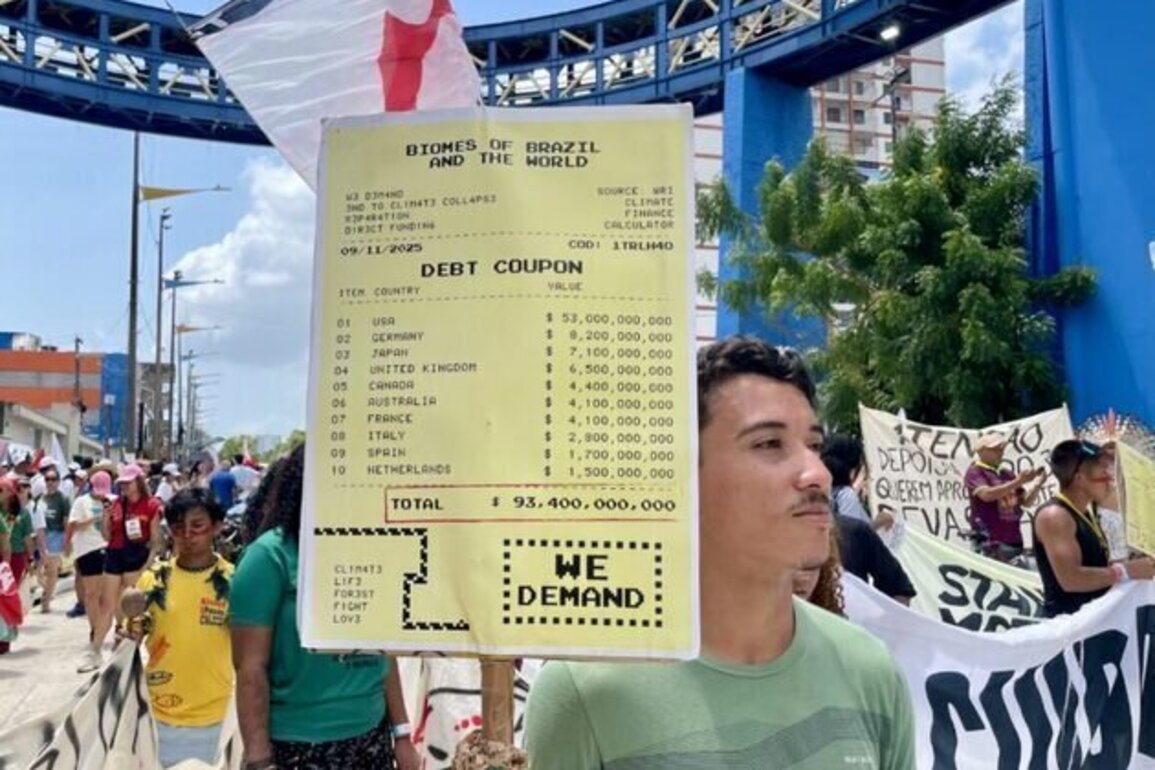
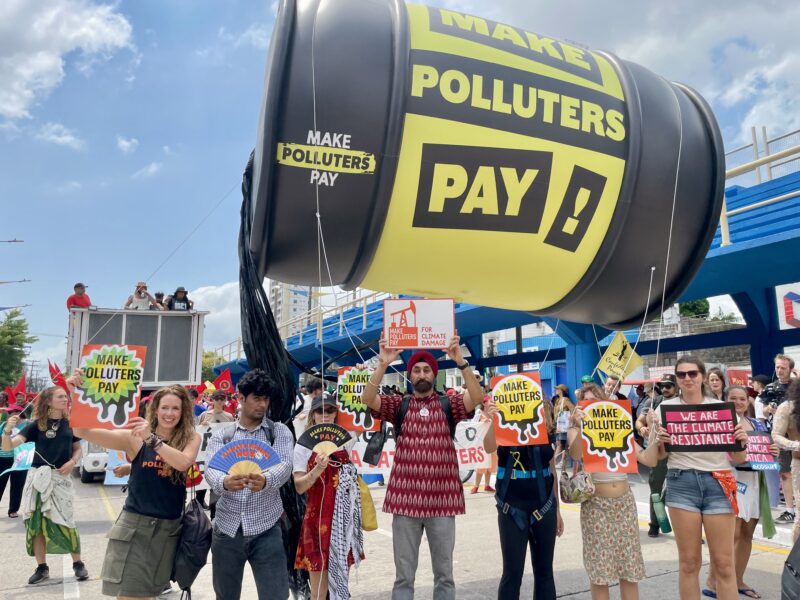
Civil society's presence culminated Saturday in the return of the Great People's March, where organizers said about 70,000 people walked roughly 2 miles in a demonstration for climate justice.
Harjeet Singh, an activist with India's Satat Sampada Climate Foundation who has attended the talks since 2008, said this is "the first time we have seen so much political leadership from the Global South in the negotiations."
He added that "we march to remind negotiators that while they discuss in air-conditioned rooms, people are dealing with extreme heat, floods and loss of territory."
"They are there to represent those interests," he said.
With the ministerial phase starting Monday, the 194 participating countries enter the final stretch to resolve the 15 pending items. Negotiations on adaptation, finance and just transition are expected to dominate the second week.
Courthouse News reporter Marilia Marasciulo is based in Brazil.
Source: Courthouse News Service